

The Triumph Over Abuse Blog
|
4/21/2015 Helping Your Child Overcome AbuseBy Heather Teater, See the Triumph Contributor
Finding out that your child has suffered from any kind of abuse can be confusing and overwhelming. It is often difficult to know where to begin and how to help when you have never had any experience helping your child through such a crisis. Take a deep breath. Both you and your child can make it through the road to recovery in one piece and come out healed and healthy on the other side. Here are a few suggestions to help you get the process of recovery started. 1. Get Counseling for Both Your Child and Yourself Your child could have a number of responses to the abuse they experienced. They may show obvious signs of trauma or other mental health concerns such as nightmares, fear, crying, etc. Your child may also show more behavioral symptoms, such as defiance, aggressiveness, disruptive behaviors, or other concerns that were not present or were less frequent prior to the abuse. However, your child may not immediately show any symptoms at all and may appear to be unaffected by the abuse. Regardless, your child would benefit from seeing a mental health professional who can help them develop new coping skills and learn healthy ways to talk about their trauma. And, parents, even if you were not a direct victim of the abuse, you may be suffering from guilt, helplessness, depression, or other effects of secondary trauma. Counselors can help you learn how to manage your own symptoms as well as help you support your child through their own recovery. Some treatments that have been developed for treating trauma, such as trauma-focused cognitive-behavioral therapy (TFCBT), have a parental component built into the child’s therapy so that you and your child can learn the same skills and be on the same page throughout treatment. Whether you see the same counselor as your child or not, it is important to be involved in your child’s therapy so that you can help them practice and develop the skills that they learn each week. 2. Don’t Blame Your Child for the Abuse Sometimes it can be easy to fall into the trap of thinking that your child played a part in their abuse. They may have accepted gifts from the abuser, gone somewhere that they weren’t supposed to go, or seemed to provoke the abuser in some other way. No matter what your child has done, abuse is NEVER their fault. Your child is not responsible for the actions of others and had no control in the abusive situation. It is not uncommon to feel anger towards your child for exposing the abuse. However, it is not helpful to express those feelings of anger to your child – process and talk through your anger with your therapist, away from your child. Your child may already have feelings of responsibility for their abuse – what they need from you is love, support, and someone to tell them that they are not to blame. 3. Be Understanding, but Don’t Let Your Rules and Structure at Home Become Lax While it may seem counterintuitive, what your child needs is structure, predictability, and stability after abuse. Letting them get away with behaviors for which they would usually be disciplined is not going to help your child’s recovery. It is common for children to act out behaviorally following abuse. Sit your child down and talk to them about how you understand that they have been hurt by the abuse and that they are mad, sad, etc., but that you and their counselor are going to help them find healthier ways to cope with those feelings. It may be helpful to talk to your or your child’s counselor about the most effective ways to discipline your child without being overly harsh or too relaxed. 4. Find Balance When Talking About the Abuse Understand that it may take a while for your child to want to talk about their abuse – and it may always be a difficult topic. On the other hand, your child may want to talk to you about the abuse at some point and they need the opportunity and space to do so. If you aren’t ready for that, it’s okay to let them know that you need more time for your own processing and that you will make sure they get to talk to their counselor about it. However, once you are ready, don’t forget to bring that opportunity back to them. Your child needs to know that they can talk to you when they are struggling through this process. That being said, you also don’t want your child to talk about their abuse 24/7. It’s not healthy for them to ruminate on the abuse every moment of every day. It is important for you and your child’s counselor to help them find an appropriate balance. 5. Create a Safety Plan Chances are the abuse that your child has suffered has impacted their sense of safety. With the help of a mental health professional, it may be useful to help your child come up with a plan that will help them feel safer throughout the day. Include things such as being sure that doors are locked at night, checking who is at the door before letting someone inside, a code word that your child can use when they feel unsafe, who your child can call when you aren’t around, and which adults help your child feel safe. These suggestions are just a starting point for helping your child through this recovery process. Getting the process of recovery started as soon as possible for both you and your child is essential. While this can feel overwhelming, know that you are not alone. With the help of friends, family, counselors, and/or support groups with other parents of children who have been abused, you can help your child through this ordeal and survive it yourself. While no parent wants their children to be abused, remember this – you and your child are strong enough to heal and recover. 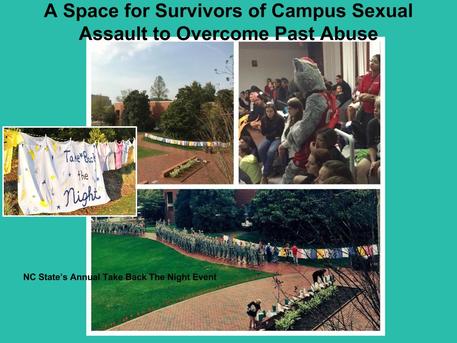 By Sara Forcella, See the Triumph Contributor
On April, 9 members of NC State’s community came together to raise awareness about an important public health concern, sexual assault. Present were members of the faculty and staff, administrators and deans, students who represented members of various fraternities and sororities, athletic teams, residence halls, military affiliations and student groups. I was blown away by the amount of sheer love and support seen that night. As an advocate who works very closely with survivors, I was proud to see that so many students truly care about ending sexual assault on campus. One of the most powerful pieces of our Take Back the Night Event, was the Clothesline Project. This is a space where we displayed t-shirts created by survivors and allies. Many of the t-shirts were decorated with sayings like, “I am a survivor”, “You can never hurt me again”, “It was not your fault”, “You are strong”, and “You are a survivor, not a victim.” The courage displayed was beyond what I could imagine. As people passing by stopped and looked at these t-shirts, they too were struck by their profoundness. These were created by members of our campus, our pack! One group who was particularly engaged during the night’s events was the Army ROTC. They came to the event in full uniform and in formation, a sight that was truly breath taking. A common theme heard during both the rally portion of the night and the survivor speak-out portion was the importance supporting survivors of sexual assault. Time and time again, we were reminded of the importance of creating a campus that holds perpetrators accountable and supports survivors. We challenged each other to build a strong campus community where rape jokes aren’t made and, when they are, they are quickly stopped, where survivors feel safe to reach out to staff members to share their stories and make reports, where students feel empowered enough to know how to help survivors of sexual assault, and where we are all knowledgeable about bystander intervention skills. I must admit that I left the event with a full heart, not because I was saddened by what I had heard, though I most definitely was, but more because I was immensely proud! I was so incredibly filled with love and pride for not only my campus, but for the survivors who were brave enough to share their stories and for each and every survivor that I have ever worked with. When I work with survivors, or when I looked in the eyes of the survivors speaking on stage, I saw just that--a survivor. Not a victim; never a victim! The point of this event was not only to raise awareness about sexual assault on college campuses, but more importantly, I feel, to give survivors and allies a space where they can speak about their experiences: the fear, the shame, the guilt, the silence, the pain, the pride, the power, the strength, and the growth. I am really proud that we were able to create this safe space for students to gather and speak the truth and share their stories. It is my hope that during this night, during this process, that we helped survivors heal as much as we raised awareness! |
Archives
April 2024
CategoriesAll About Intimate Partner Violence About Intimate Partner Violence Advocacy Ambassadors Children Churches College Campuses Cultural Issues Domestic Violence Awareness Month Financial Recovery How To Help A Friend Human Rights Human-rights Immigrants International Media Overcoming Past Abuse Overcoming-past-abuse Parenting Prevention Resources For Survivors Safe Relationships Following Abuse Schools Selfcare Self-care Sexual Assault Sexuality Social Justice Social-justice Stigma Supporting Survivors Survivor Quotes Survivor-quotes Survivor Stories Teen Dating Violence Trafficking Transformative-approaches |
 RSS Feed