
See the Triumph
  • Home
  • About Us
    • The Origins of See the Triumph
    • About our Research
    • Terms of Use
  • Blog
    • See the Triumph Collections
  • "Free Store"
  • Resources for More Information
  • Contact Us
  • Home
  • About Us
    • The Origins of See the Triumph
    • About our Research
    • Terms of Use
  • Blog
    • See the Triumph Collections
  • "Free Store"
  • Resources for More Information
  • Contact Us
Search by typing & pressing enter

YOUR CART

Picture
The Triumph Over Abuse Blog

5/13/2015

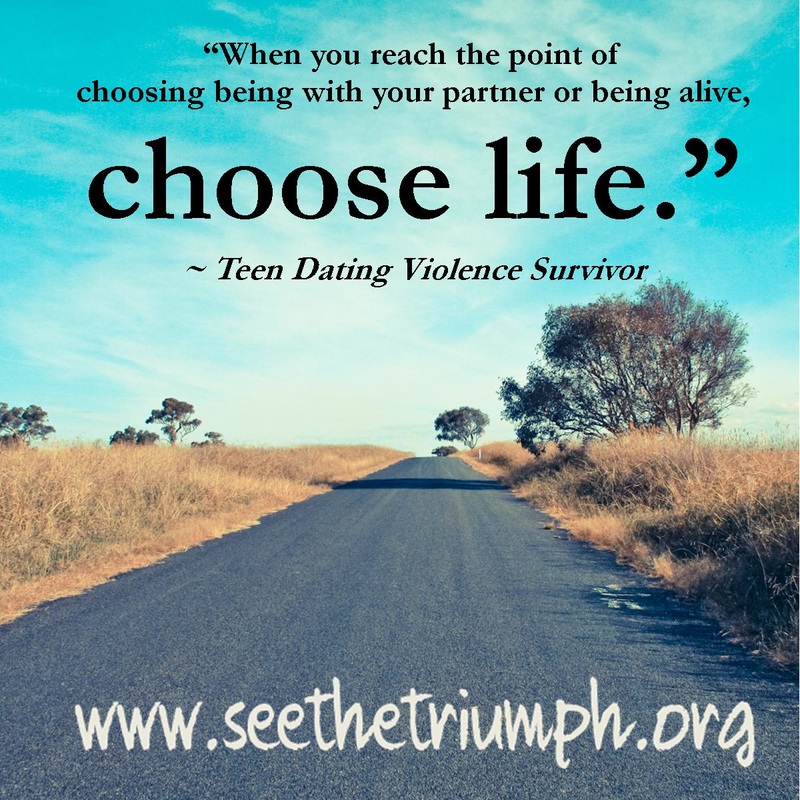
When You Reach The Point of Choosing...Choose Life

Picture

5/13/2015

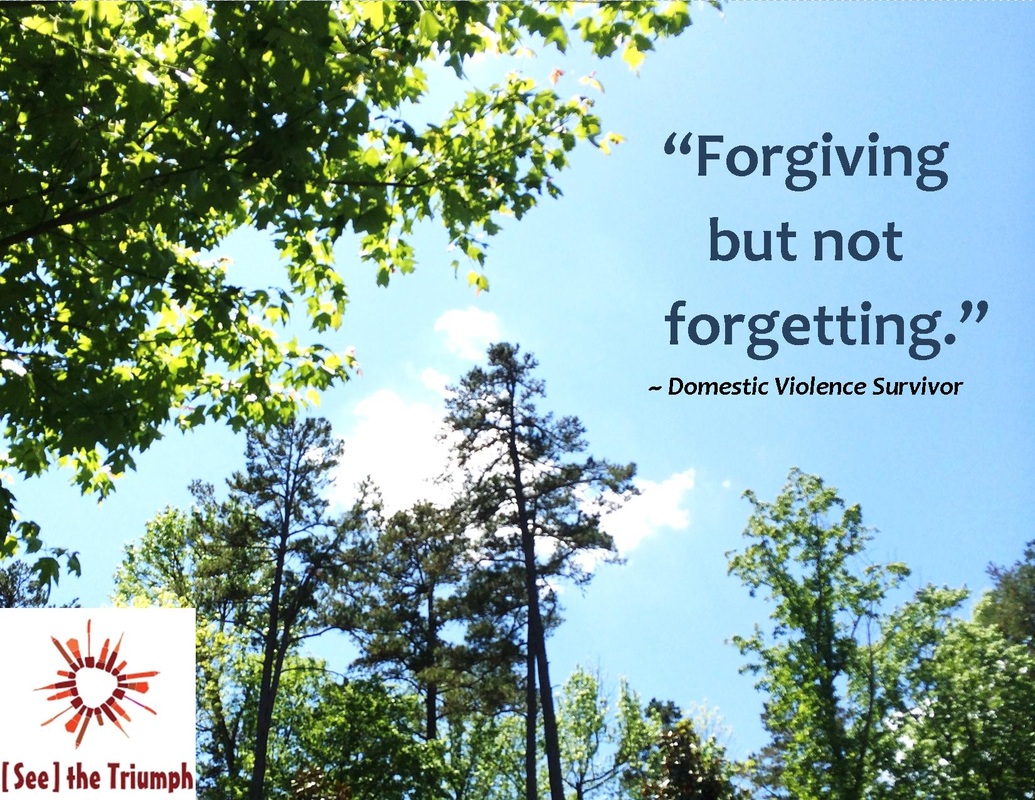
Forgiving but not Forgetting

Picture

5/11/2015

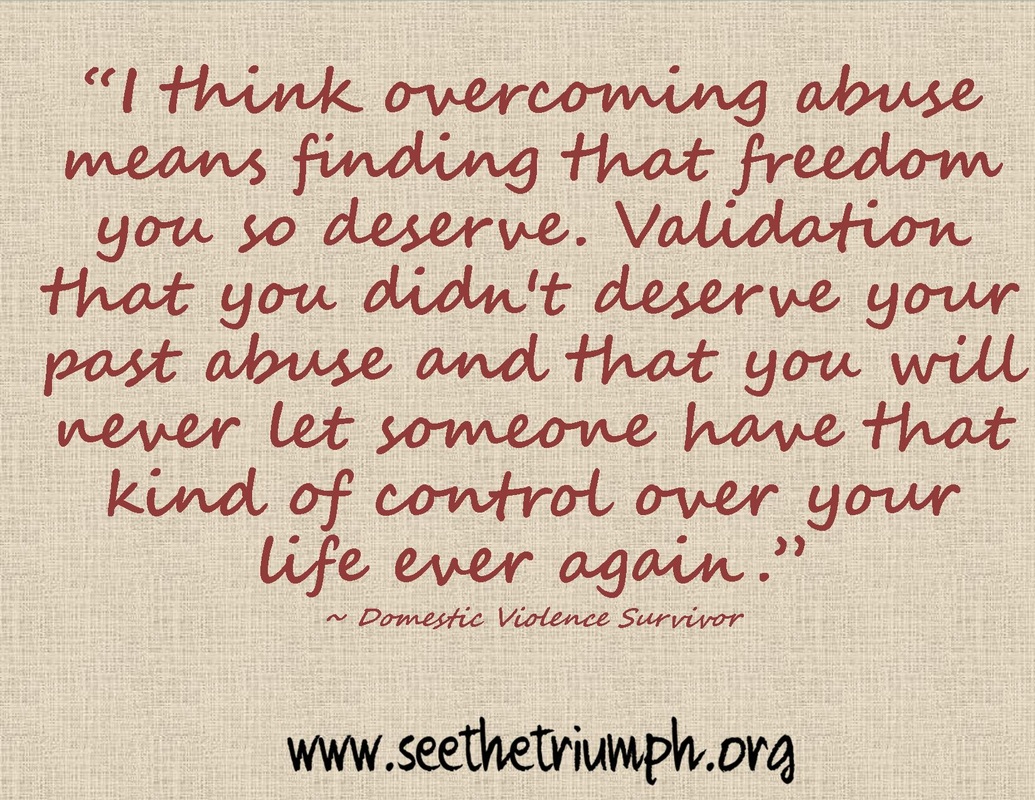
Finding that Freedom You So Deserve

Picture

5/8/2015

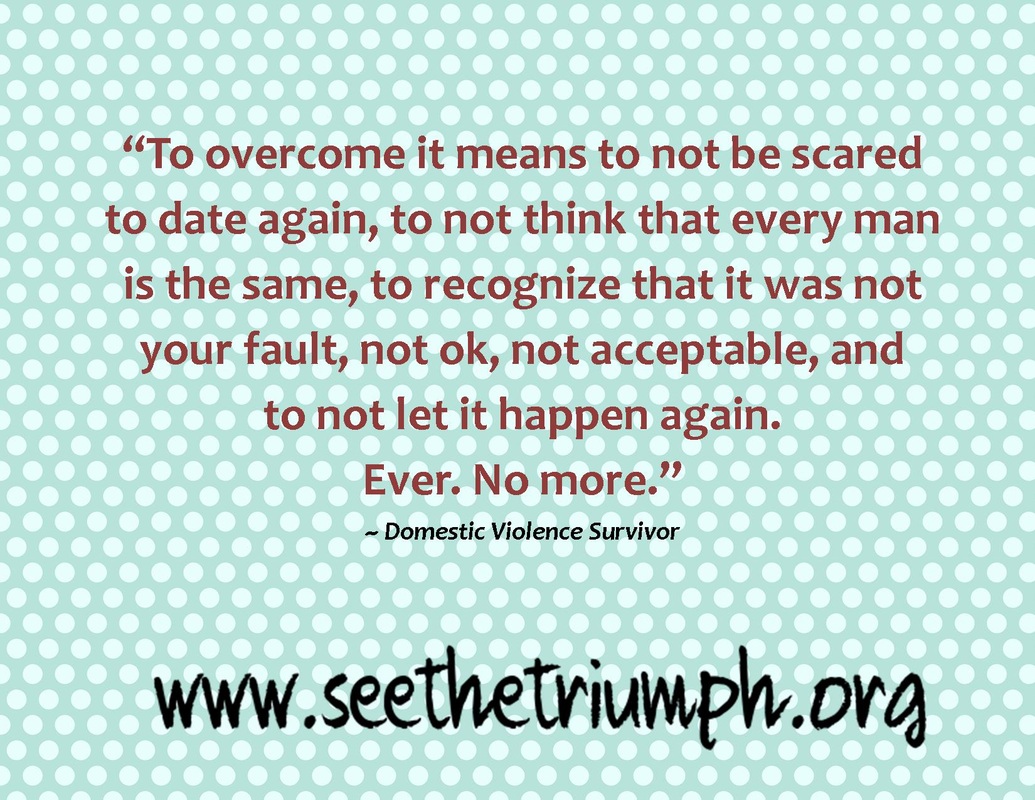
Ever. No More.

Picture

5/7/2015

Giving Yourself the Green Light to Say "Stop": Practicing Good Self-Care

By Sara Forcella, See the Triumph Contributor

Over the course of this summer See the Triumph is focusing on ways that survivors can be supported. We focus a lot on how survivors deal with all of the hurt, anger, fear, etc. from these relationship--topics that are extremely important. Nonetheless, in this post, I’d like to discuss something a bit different; something I’ve personally been struggling with for the past few months. I want to talk about how friends, family, and allies of survivors help themselves.

Being an advocate is hard work, not only because of the long hours, or typically the less-than-amazing pay, but because it’s hard on the mind and heart. It takes a special kind of person to work day in and day out dealing with others' problems. I say this with nothing but respect; I choose to deal with others' problems. I want to advocate for them, to help them, to care for them. It’s what I love to do and I would never, trade my career choice for one that was less meaningful, but came with a  larger paycheck. However, advocates usually know what they are signing up for; friends and family members of survivors usually don’t.

See the Triumph has spoken about how friends and family members can help survivors of abuse or sexual assault, which can be found here. My question though is, how do these folks help themselves? Knowing a survivor, listening to their stories, trying to support them, again can be difficult. It takes courage, empathy and strength. As an ally, sometimes it feels as if you are living in that abusive relationship, just without all of the mental and physical scars. And I can tell you from first hand experience that it’s scary! Not knowing whether you’re going to get that call that your friend has just been brutally beaten, or worse, is enough to make you sick. It’s also scary because it’s hard to know when to speak up, when to step in, and when to say something, because you don’t want to push that survivor away, and you don’t want to lose them.

Advocates and allies of survivors can deal with what’s called vicarious trauma. Simply put, this is trauma that results from consistent meaningful, empathetic, engagement with survivors. Vicarious trauma is real, and it happens more than you think. That’s why it is so important for those who listen to survivors’ stories, who feel their pain--who worry, care, and cry for them--to take good care of themselves. It is a must that we practice good self-care--that we are able to step away from the situation and give our minds and hearts the approval to step away from that space.

Practicing good self-care is something that I spend lots of time talking about and practicing with the group of peer educators that I work with. In fact, I used an entire meeting just to teach them some basic meditation skills. It struck me the other day when one of my typically upbeat and engaged students seemed spacy and withdrawn. Later, I found out that she was dealing with some pretty heavy stuff, as she was dealing with (what seemed to me) some vicarious trauma. She was so concerned about the well being of a friend that she didn’t even realize that it was affecting her. The advice that I gave her and the advice that I am working on accepting for myself is that it is okay to take a step away.

Yes, I said it! It is okay to tell a survivor who’s a friend or family member that you need to take a step back, that you need to take care of yourself. As an ally, the abuse and pain is not yours, and you cannot own it. You can empathize, support and help, but please do not own it! I look at it this way: you’ve got a figurative backpack of gunk--pain, hurt, anger, fear--of your own. It’s not healthy to take on the gunk of others’ backpacks. I acknowledge that this is way easier said than done. It’s really hard for me to allow myself to take a step away. Why? Because it feels like I’m abandoning my friend; it feels like I’m being a crappy person! What I want you to know though, is that you are not abandoning them or trying to hurt them. You are only trying to better yourself, so that when they really need you, you can be there for them.

Practicing good self-care means that it is okay to respectfully, tactfully let your friend, brother, partner, whomever, know that you need to take a step back. Or, that you just can’t handle a story on that particular day. It means you can give yourself a green light to let them know that you are going to be really busy in the next few days and may not be as readily available as you have in the past. I can assure you that running your own emotional and physical well-being into the ground is not going to help you, or a survivor. So, speak up and be honest; it is okay to put your own needs before others, in fact, sometimes it’s necessary.
5/6/2015

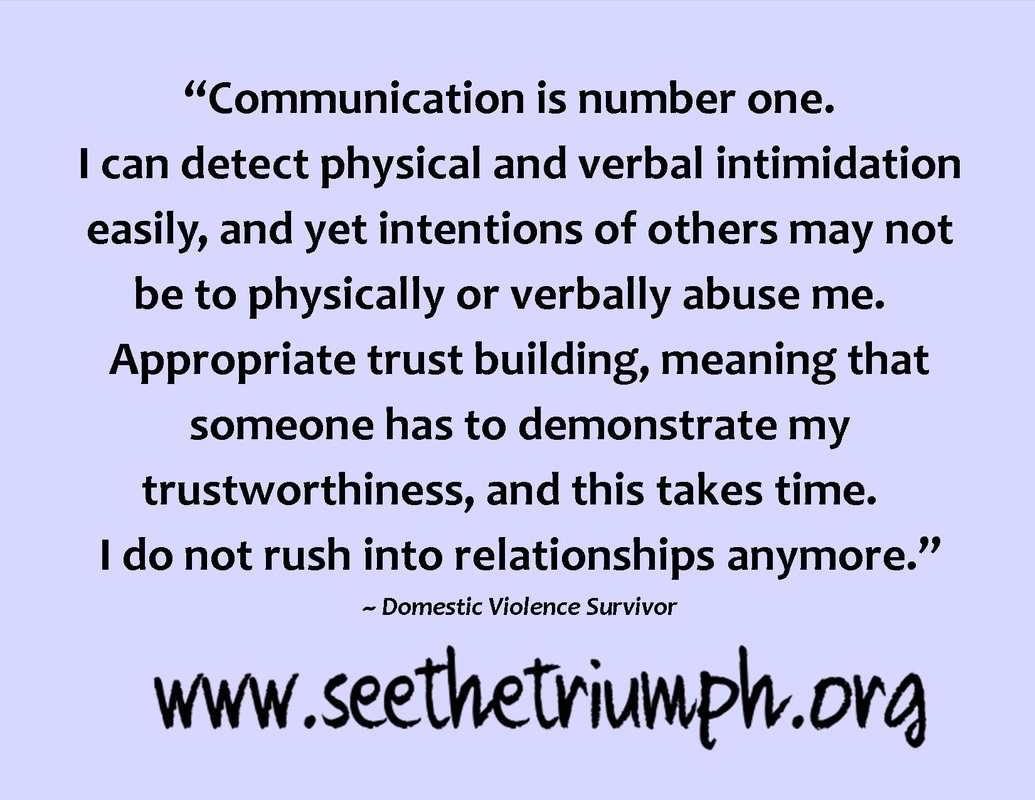
Communication Is Number one

Picture

5/4/2015

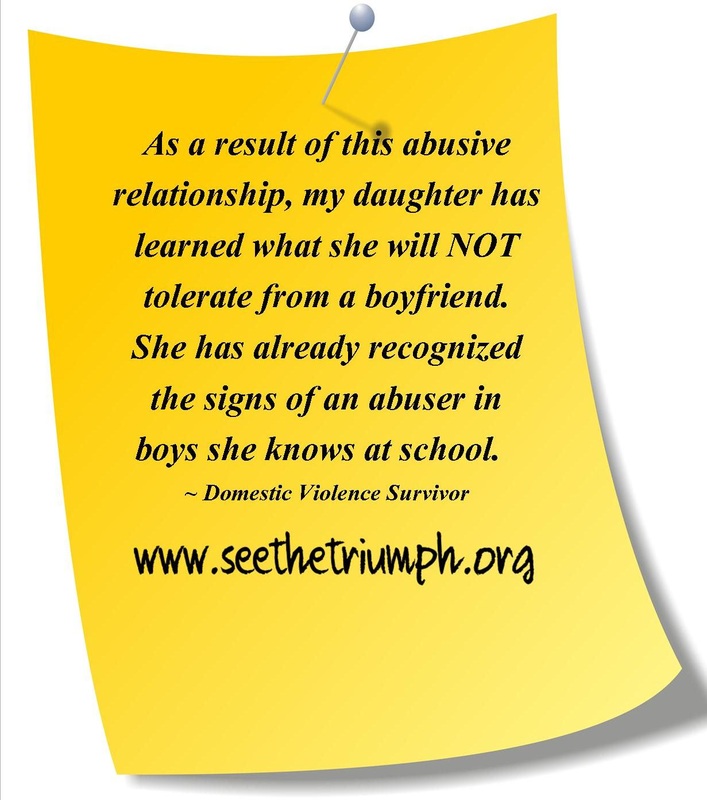
As a Result of this Abusive Relationship...

Picture

5/2/2015

Supporting Survivors: Summer Series Introduction

Picture
By Christine Murray, See the Triumph Co-Founder

The two main goals that drive the See the Triumph campaign are to end the stigma surrounding intimate partner violence and to develop resources to support survivors. We've decided to dedicate the Summer of 2015 to the theme of "Supporting Survivors." This focus is critical to our mission at See the Triumph for many reasons, including the following:
  • Survivors of abuse often feel alone and isolated, potentially due to their abuse, a lack of support available to them in their communities, or messages they learn from society that they are somehow different from other people.
  • When people know someone--whether it's a friend, family, co-worker, or someone else--who is facing abuse, they often want to help and provide support, but they don't know how. We have focused on this topic a lot in the past, but we think the broad theme of Supporting Survivors this summer can also help raise awareness about more ways that people can help and support the survivors in their lives. 
  • People who are currently or were previously in an abusive relationship often need a lot of support, although the support that they need varies from person to person.  There are no easy rules or simple recipe for helping someone dealing with current or past abuse, as every situation and every person is so unique. Abusive relationships can impact people in so many areas of their lives, including their friendships, work or educational goals, finances, and physical and mental health. Therefore, there's a wide range of potential needs and resources that survivors could benefit from learning about, and the more resources people know about, the better equipped they'll be to support themselves or someone else when new needs arise.
If you're interested in supporting survivors, here are a few ways you can do so:
  • Learn about the dynamics of abusive relationships so that you'll understand the risks that survivors may face.
  • Identify resources in your local community that are available to support survivors, and understand what they do and how survivors can access those resources.
  • Commit to challenging stigmatizing representations of abuse and survivors, whether they are found in news stories or other media, legal or organizational policies, or conversations among people in your social network.
  • Be bold in starting conversations about abuse. Talk about healthy relationships with children and young people so that they can learn how to be safe in their future relationships. Raise the issue of abuse in discussions within the community groups and organizations you're a part of. Reach out to someone if you're concerned they may be in an unhealthy or unsafe relationship.
  • Get connected to local, national, and even international organizations that are working every day to prevent future violence, support survivors, and hold offenders accountable. Many of these organizations could use your support and talents to help further their work!
Throughout this summer, we'll be sharing resources and tools to help you with each of the above goals. We look forward to focusing on ways that people can support survivors, and, perhaps most importantly, reinforcing the important message that survivors of current or past abusive relationships are worthy of support. We hope that you will share your own ideas and resources with us, and we look forward to partnering with you this summer to build even more resources for supporting survivors of abuse!


5/1/2015

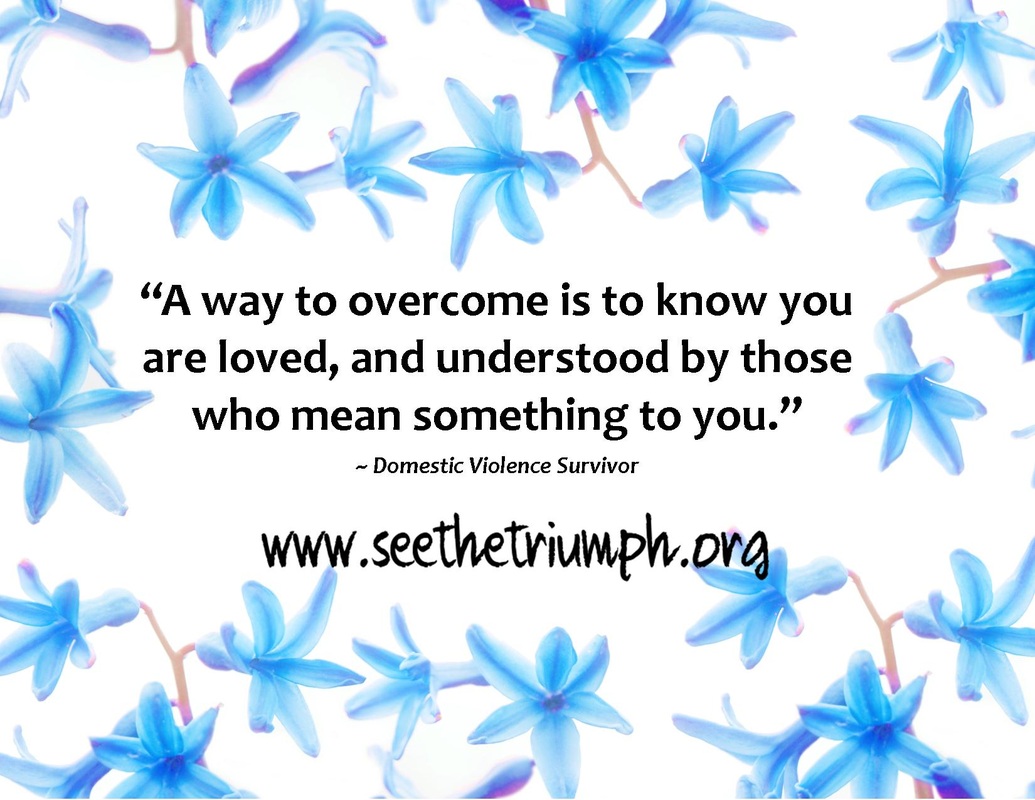
A Way To Overcome Is to Know You Are Loved

Picture
Forward>>

    Archives

    November 2024
    October 2024
    September 2024
    August 2024
    July 2024
    June 2024
    May 2024
    April 2024
    March 2024
    February 2024
    January 2024
    December 2023
    November 2023
    October 2023
    September 2023
    August 2023
    July 2023
    June 2023
    May 2023
    April 2023
    March 2023
    February 2023
    January 2023
    December 2022
    November 2022
    October 2022
    September 2022
    August 2022
    July 2022
    June 2022
    May 2022
    April 2022
    March 2022
    February 2022
    January 2022
    December 2021
    November 2021
    October 2021
    September 2021
    August 2021
    July 2021
    June 2021
    May 2021
    April 2021
    March 2021
    February 2021
    January 2021
    December 2020
    November 2020
    October 2020
    September 2020
    August 2020
    July 2020
    June 2020
    May 2020
    April 2020
    March 2020
    February 2020
    January 2020
    December 2019
    November 2019
    October 2019
    September 2019
    August 2019
    July 2019
    June 2019
    May 2019
    April 2019
    March 2019
    February 2019
    January 2019
    December 2018
    November 2018
    October 2018
    September 2018
    August 2018
    July 2018
    June 2018
    May 2018
    April 2018
    March 2018
    February 2018
    January 2018
    December 2017
    November 2017
    October 2017
    September 2017
    August 2017
    July 2017
    June 2017
    May 2017
    April 2017
    March 2017
    February 2017
    January 2017
    December 2016
    November 2016
    October 2016
    September 2016
    August 2016
    July 2016
    June 2016
    May 2016
    April 2016
    March 2016
    February 2016
    January 2016
    December 2015
    November 2015
    October 2015
    September 2015
    August 2015
    July 2015
    June 2015
    May 2015
    April 2015
    March 2015
    February 2015
    January 2015
    December 2014
    November 2014
    October 2014
    September 2014
    August 2014
    July 2014
    June 2014
    May 2014
    April 2014
    March 2014
    February 2014
    January 2014
    December 2013
    November 2013
    October 2013
    September 2013
    August 2013
    July 2013
    June 2013
    May 2013
    April 2013
    March 2013
    February 2013
    January 2013
    December 2012

    RSS Feed

    Categories

    All About Intimate Partner Violence About Intimate Partner Violence Advocacy Ambassadors Children Churches College Campuses Cultural Issues Domestic Violence Awareness Month Financial Recovery How To Help A Friend Human Rights Human-rights Immigrants International Media Overcoming Past Abuse Overcoming-past-abuse Parenting Prevention Resources For Survivors Safe Relationships Following Abuse Schools Selfcare Self-care Sexual Assault Sexuality Social Justice Social-justice Stigma Supporting Survivors Survivor Quotes Survivor-quotes Survivor Stories Teen Dating Violence Trafficking Transformative-approaches